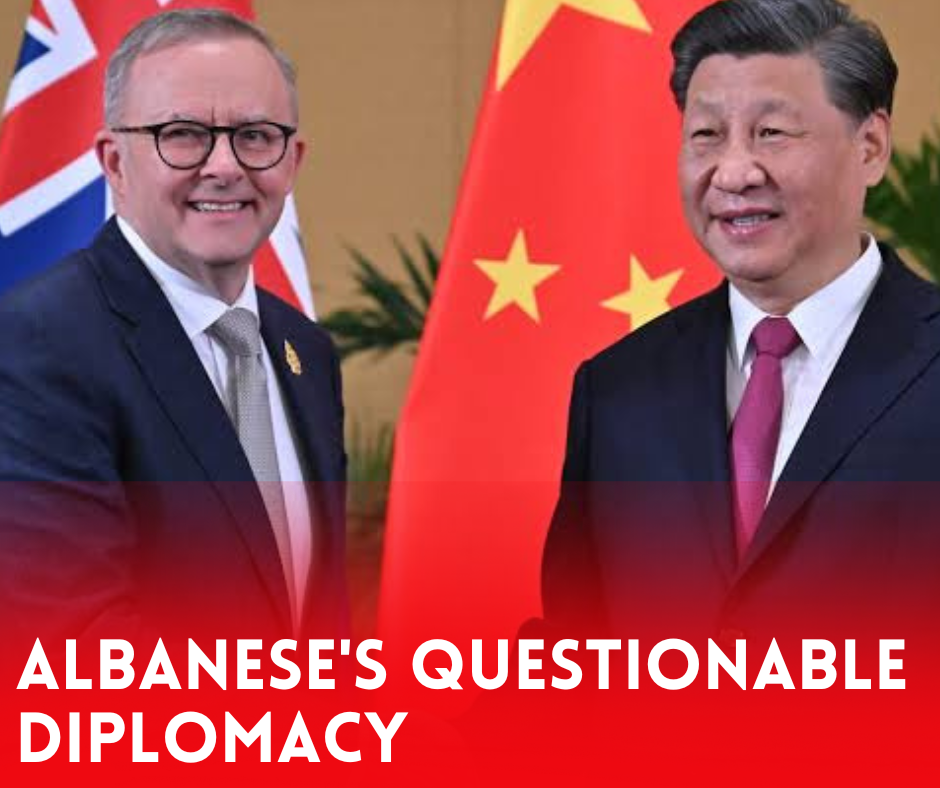
In a time when leadership is paramount, Anthony Albanese’s decision to maintain diplomatic ties with Chinese President Xi Jinping, despite the recent perilous sonar attack on Australian divers, raises serious concerns. The incident involving a Chinese warship’s aggressive use of sonar not only endangers the lives of our divers but also highlights a pressing need for a robust response from Australian leadership.
Albanese’s handshake with President Xi, in the aftermath of such a threatening maritime incident, leaves many questioning the strength of Australia’s stance on national security. The act of engaging in diplomatic niceties while our divers face potential harm sends a conflicting message to the international community and, more importantly, to the citizens he leads.
Sonar attacks pose a significant risk to divers, disrupting marine life and creating potentially life-threatening situations. It is imperative for our leaders to prioritize the safety of our citizens over diplomatic pleasantries. Cancelling the meeting with President Xi would have been a powerful statement, underlining Australia’s commitment to the well-being of its people and sending a clear message that such acts of aggression will not be tolerated.
The perception of weakness in Albanese’s response is concerning, as it sends a signal of vulnerability to both our allies and adversaries. In times of crisis, decisive action is expected from leaders, and any appearance of wavering undermines the confidence of the public and our global partners.
As we navigate the complex waters of international relations, it is essential for our leaders to project strength and unwavering commitment to the safety of our citizens. Anthony Albanese now faces a critical juncture in his leadership, where the choices made in the wake of this sonar attack will undoubtedly shape the perception of Australia’s resolve on the global stage.