So… we did it.
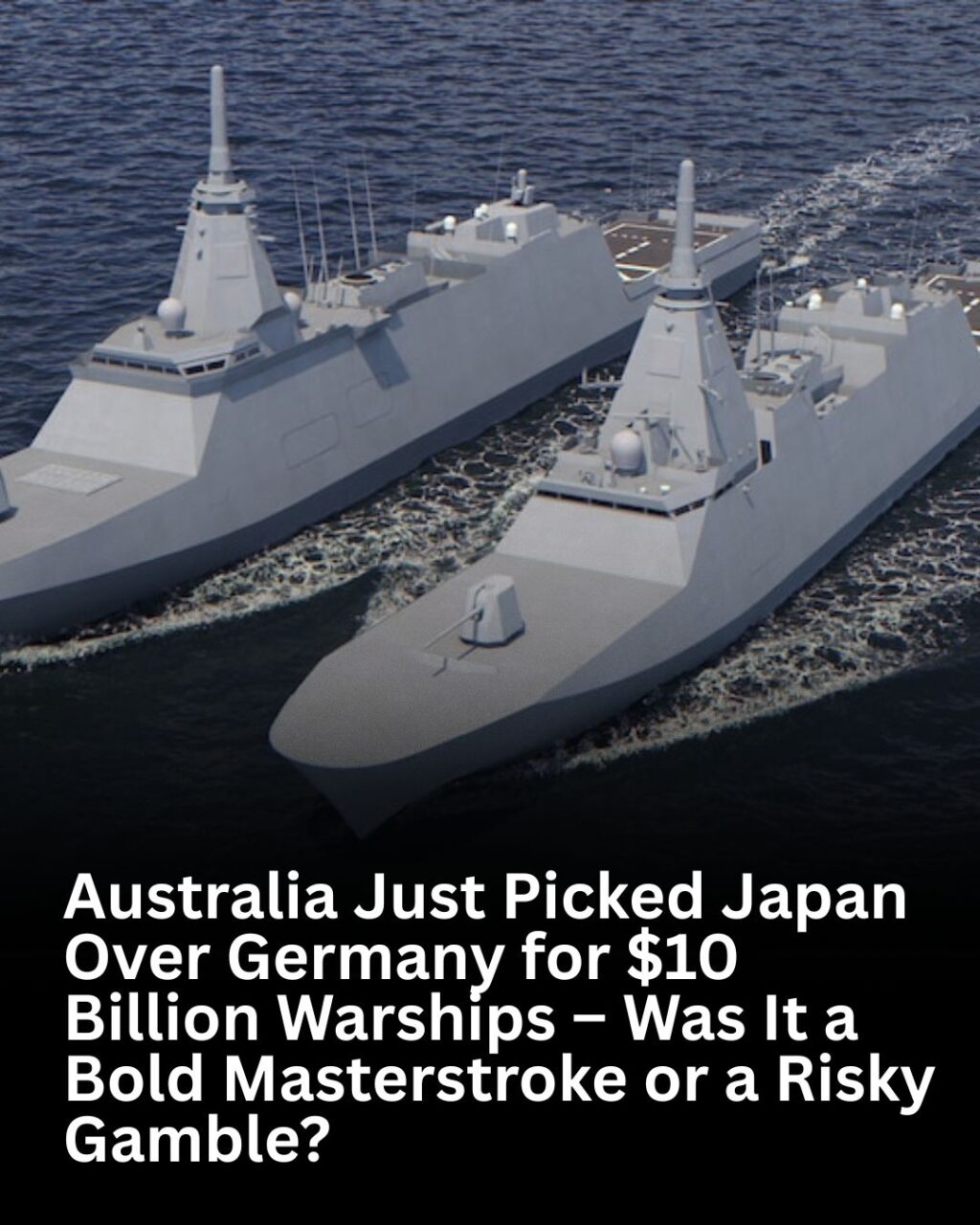
Australia just handed Japan a $10 billion contract to build our new navy frigates. Not Germany. Not a safer, cheaper, proven model. Japan. And depending on who you ask, it’s either a visionary strategic move—or the latest in a long line of overambitious defence buys we’ll regret in five years.
Let’s be honest, this wasn’t the obvious choice. Germany’s MEKO A-200 was cheaper, simpler, and had a solid track record in exports. For a country still struggling to deliver submarines and overhauls on schedule, the “safe option” would’ve been very on-brand. But this time, we didn’t go safe. We went sharp. We went fast. We went all in.
The Japanese Mogami-class frigate is lean, lethal, and built for the kind of high-stakes maritime environment we’re now staring down in the Indo-Pacific. It runs with around 90 crew—crucial when the Navy’s recruitment pipeline looks more like a garden hose. It carries more missiles, uses smarter tech, and integrates neatly with US systems, which—let’s not kid ourselves—is going to matter a whole lot if the region gets hot.
But this isn’t just about the hardware. This is about who we want standing beside us when things go sideways. Japan didn’t just offer us a ship. They offered full access to their tech, their designs, their IP. They even offered to deliver the ships before their own navy gets theirs. That’s not just cooperation—that’s commitment. That’s alliance-building you can weld together.
Of course, it costs more—about 20% more upfront than the German bid. But over a 40-year lifespan? With smaller crews, better automation, and strategic alignment? You could argue we’re getting better bang for our buck in the long run. And in defence, long-term value matters more than sticker shock.
This is not without risk. Japan hasn’t exported warships like this before. There’s uncertainty. There’s complexity. But sometimes being first is the cost of being serious. Because here’s the truth: if these frigates were only meant to float around the coast looking pretty, the German model would’ve done the job. But that’s not the world we live in anymore.
This is about speed. It’s about strategic flexibility. It’s about being ready when we need to be—not in 2040, not after another audit—but in the next few years. And for once, it looks like we’ve actually made a call that reflects that urgency.
So yes, we’ve taken a gamble. But maybe it’s a smart one. Maybe it’s a sign that Canberra is finally waking up to the fact that geography is not just about maps—it’s about risk, responsibility, and readiness. We’re not as far away from the storm as we like to think. In fact, we’re right on the edge of it.
Was it the safest decision? No. Was it the right one? Time will tell. But in a region that rewards strength and punishes hesitation, this just might be the strongest move we’ve made in years.
And if we’re wrong? Well, at least we didn’t go quietly.