When a real crisis hits, you find out very quickly who’s actually leading—and who’s just pretending.
Because right now, Australia isn’t dealing with a minor inconvenience. This is a slow-moving shock to the system. Fuel supply tightening. Diesel becoming harder to secure. Costs blowing out across the board. The kind of conditions that don’t just hurt households—they threaten the backbone of the economy.
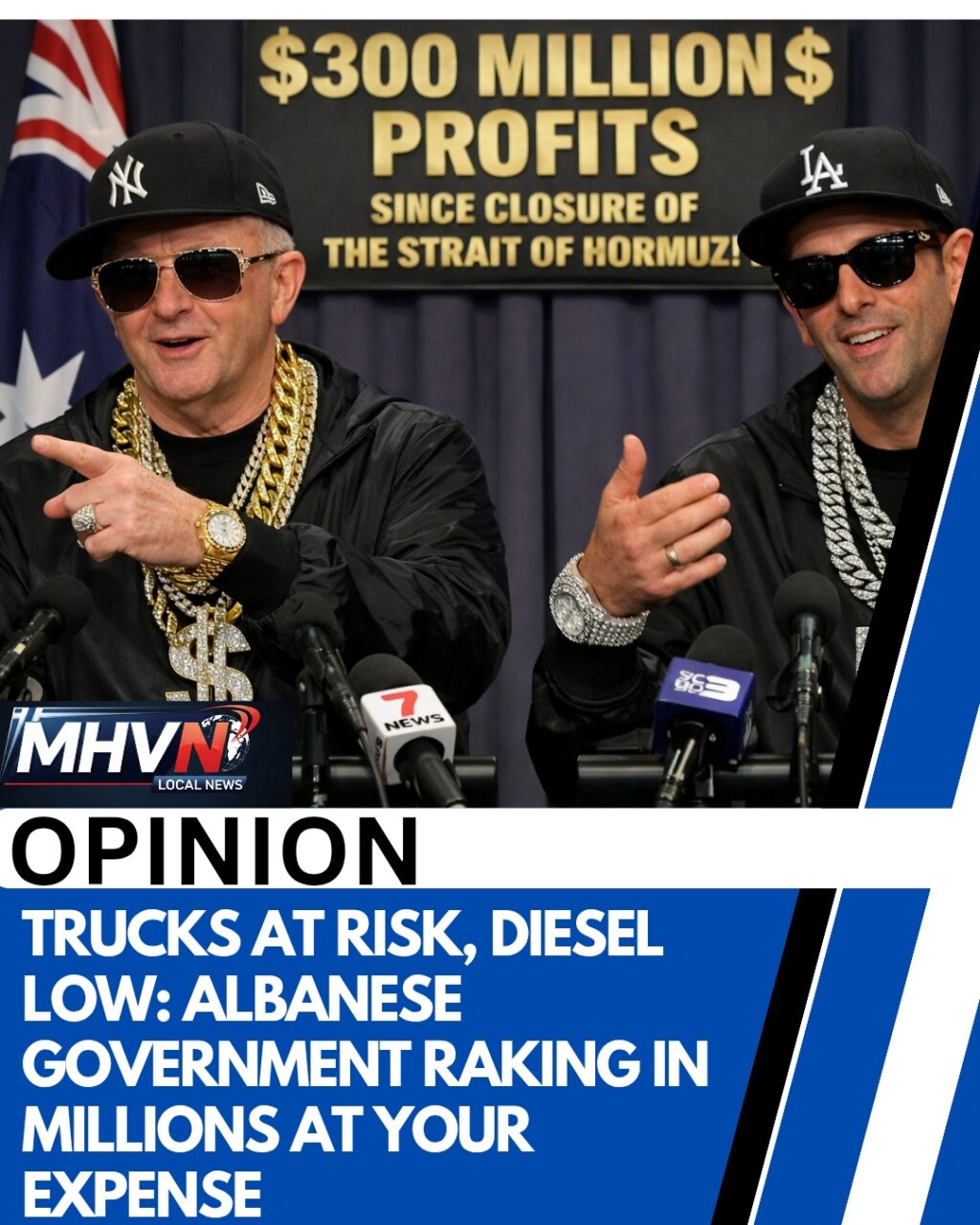
And yet somehow, the response from Anthony Albanese has been… content creation.
Carefully staged videos. Social media clips. Messaging designed to look reassuring while avoiding the reality Australians are dealing with every day. It’s leadership by algorithm—say the right words, hit the right tone, and hope nobody notices what’s actually happening.
But people are noticing.
They notice when filling the tank becomes a financial decision. They notice when energy bills spike without warning. They notice when rent and interest rates climb so fast it feels like the ground is shifting under their feet.
And then they’re told a four percent pay rise is the answer.
Four percent. In this environment. It’s not just inadequate—it’s almost mocking. As if Australians can’t do basic maths. As if they won’t connect the dots between rising costs and shrinking real wages.
What makes it worse is how this has been handled from the start.
First, the problem was dismissed. Then, when pressure built, the blame shifted—suddenly everyday Australians were the issue for trying to prepare. Farmers, transport operators, small businesses—all painted as part of the problem simply for doing what they’ve always done to keep things running.
Now, finally, there’s an acknowledgment—but only just. A few tankers redirected. A limited release from reserves. Enough to say “we did something,” but nowhere near enough to match the scale of the challenge.
And while all this is unfolding, where are the voices that are supposed to represent the hardest-hit regions?
Where is Dan Repacholi?
The Hunter region built on industry, transport, and energy. If anywhere should be sounding the alarm, it’s the Hunter. But instead—silence. The social media presence is there when it’s easy, when it’s safe, when it’s politically convenient. But in a moment like this? Nothing.
It’s hard not to conclude that the message has gone out: keep quiet, stay on script, don’t inflame the situation.
But the situation doesn’t care about the script.
Out in the real world, trucks are starting to park up. Not as a tactic—as a necessity. No diesel, no movement. And when the movement stops, everything else follows. Supplies tighten. Shelves empty. Prices climb even higher.
This is the kind of chain reaction that governments are supposed to get ahead of—not react to after the damage is done.
Because once it reaches that point, no amount of messaging can contain it.
And that’s the looming reality: a government still talking like this is manageable, while the early signs suggest something much bigger is unfolding.
When it finally hits—when the effects are impossible to ignore—Australians won’t be thinking about social media clips or staged announcements.
They’ll be asking why the people in charge didn’t act when it still mattered.