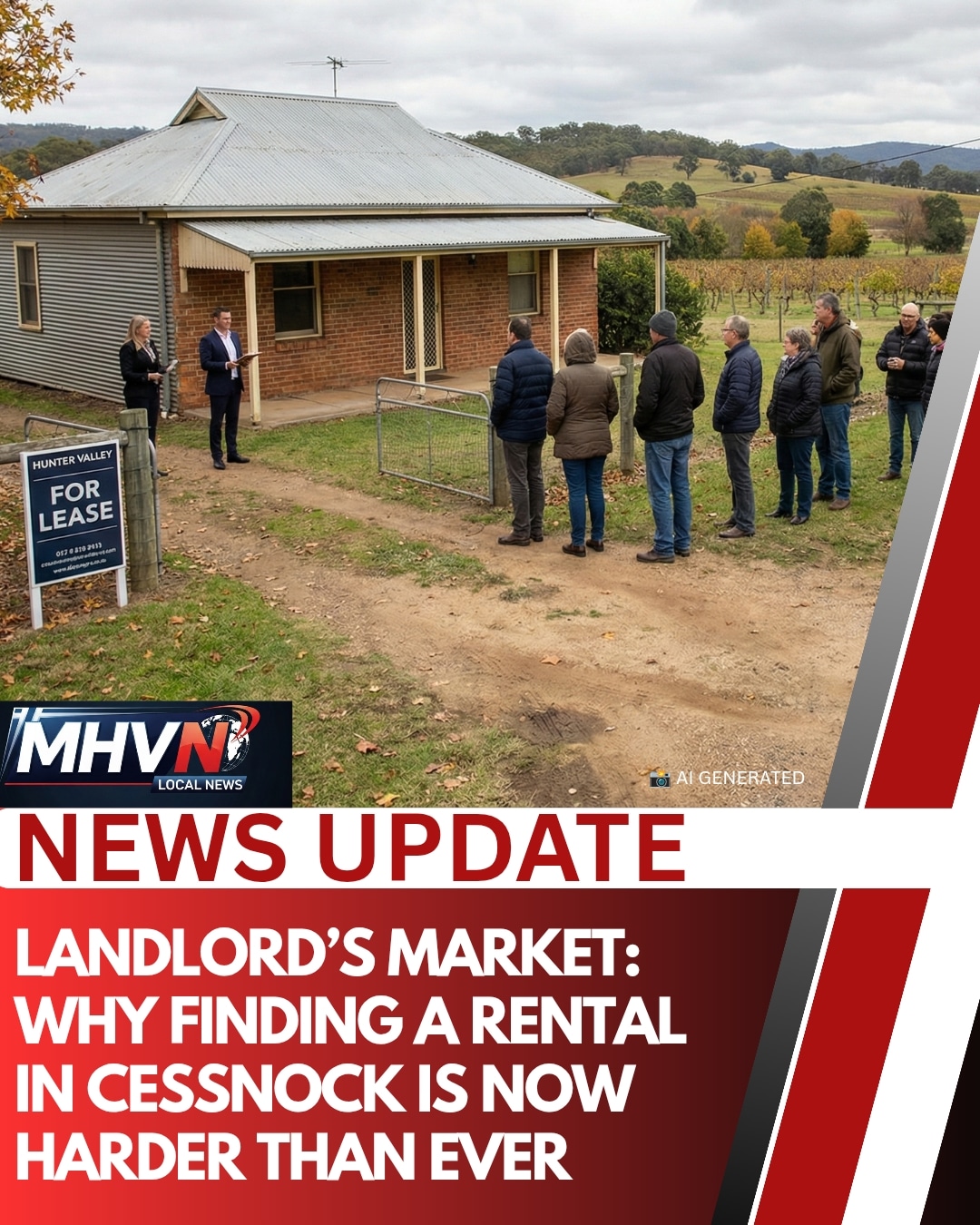
The rental market across the Cessnock Local Government Area (LGA) is tighter and hotter than at any point in recent memory, with rents climbing, vacancies shrinking to historic lows, and tenants battling for limited listings — creating a crisis that’s dominating community discussion and shaking up local housing dynamics.
📈 Rents Are Increasing — But So Is Competition
Recent data shows that rental prices across Cessnock have grown noticeably over the past year, with substantial increases across houses and units:
- Median house rent is sitting around $530 per week — up about 6% year-on-year. (OpenAgent)
- Median unit rent sits around $445 per week, also recording moderate growth. (Realestate)
- Smaller homes don’t deliver much relief; even two-bed houses are renting near $450/week. (Realestate)
With incomes in the region generally lower than in capital cities, this rising rent level is prompting financial pressure for many local families and adults on fixed incomes.
🔥 Vacancy Rates Have Crashed — Undersupply Is Real
Vacancy rates in the Lower Hunter region — which includes Cessnock — are critically low, reflecting a fundamental undersupply in the rental market:
- The vacancy rate is estimated at around 1.2–1.3% — significantly below the Real Estate Institute of Australia’s healthy benchmark of ~3%. (PRD Real Estate)
What does that mean in practice? Most rental properties are snapped up within days of listing, with only tiny fractions of homes available at any one time. This creates a landlord’s market where tenants must compete intensely for each opportunity.
🏠 Tenants Feeling the Squeeze: Fast Lettings & Pressure on Choice
The consequences of low vacancy and rising rents are showing up in tenant behaviour and experiences:
- Many renters report properties being leased within days of listing — often with applications exceeding available rooms. (MHV NEWS)
- Rental demand in some segments has actually dropped slightly, not because demand is weak, but because there are fewer listings overall — leaving would-be renters with limited options. (Realestate)
For families, young professionals, and students, this means longer search times, rushed decisions, and often higher rent offers to secure a place.
🌍 Short-Stay Rentals: A Pressure Valve — Or Part of the Problem?
While short-term holiday homes (like Airbnbs) are increasingly common in parts of the Hunter Valley, data suggests they are a double-edged sword:
- A significant number of listings in the wider region are capable of switching between long-term and short-stay rental markets, adding volatility to supply. (View Australia)
While some investors see short-stay as attractive, others are opting for the security of long-term tenants amid interest rate pressures — potentially helping supply in some pockets.
💰 Investors Are Watching — Yields Are Still Strong
Cessnock continues to attract investor interest thanks to relatively high rental yields — often hovering around 4–4.5% for houses and units — a stronger return than many capital cities. (Buyers Agent Group Cessnock)
However, investor activity can be a mixed bag: while more investment can increase total housing stock, it doesn’t always translate into more long-term rentals — especially if some of that stock stays in short-stay markets.
📊 What This Means for Locals
For renters in Cessnock LGA in late 2025:
- 📍 Expect fierce competition: With vacancies so tight, renters must act fast and be well-prepared at inspections.
- 💸 Affordability remains a challenge: Rents continue rising faster than many local incomes, squeezing household budgets.
- 🔍 Limited choice: Especially for family-sized homes and affordable units — these remain toughest to secure.
🧠 Expert Take
Analysts describe Cessnock’s rental market as being in a “landlord’s market” — where supply continues to lag behind strong demand, pushing rents up and vacancies down. With regional population growth and limited new rental stock, many expect the crunch to persist through 2026 unless new housing solutions emerge.
📌 Snapshot Summary
| Metric | Latest Trend |
|---|---|
| Median House Rent | ~$530/week (↑) |
| Median Unit Rent | ~$445/week (↑) |
| Vacancy Rate | ~1.2–1.3% (very tight) |
| Rental Demand | High despite fewer listings |
| Investor Yield | ~4–4.5% |