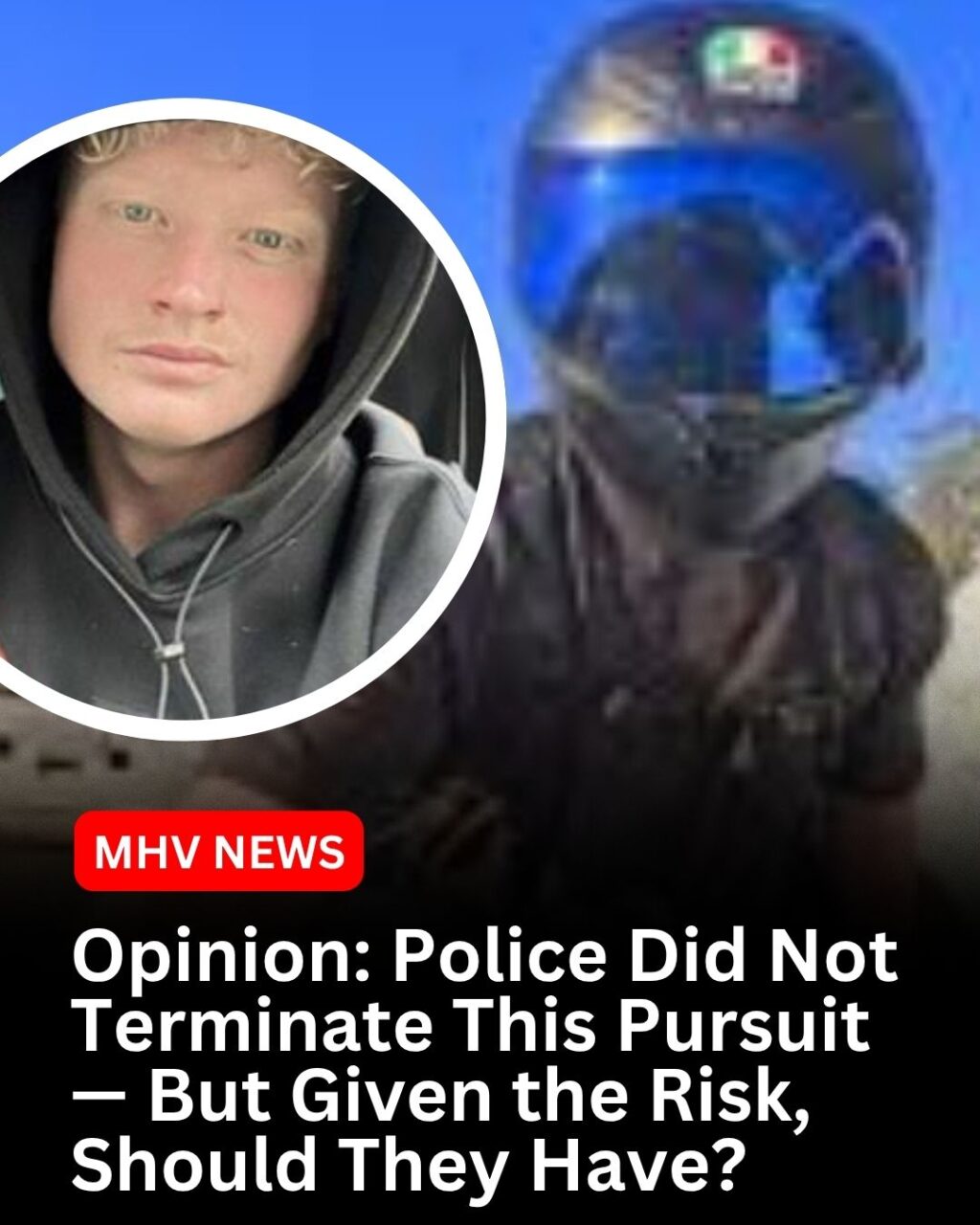
The tragic death of 20-year-old Bradley Wilder during a police pursuit in Newcastle has sparked an outpouring of grief — and a wave of difficult questions about the role and limits of police chases in our state.
Bradley was remembered by friends as respectful and well-mannered — not the kind of person you’d expect to make national headlines. But when police spotted him riding a motorbike without a number plate through King Street, Hamilton, and he refused to stop when directed, they gave chase. What followed was a high-speed pursuit through suburban streets to Charlestown around 8 to 9km trip. Moments later, Bradley crashed and died at the scene.
Let’s be clear about the facts: police did not call off the pursuit — despite the rider’s dangerous speeds, red-light running, and the presence of other road users. Now, many are asking: why not?
At the time the pursuit began, the only known offence was that the bike had no visible number plate, and the rider failed to stop. That’s it. There was no knowledge of any violent crime, no reports of weapons, and no confirmed criminal activity beyond a traffic matter. And while Bradley’s decision to flee was reckless — and sadly, fatal — the question remains whether pursuing him at high speed through busy roads was proportionate to the known risk.
Motorcyclists can and do lose number plates, particularly on rough roads. It’s not uncommon. The bike itself may very well have been registered, and his failure to stop could have stemmed from panic, a moment of poor judgement, or simply thrill-seeking. Videos online suggest Bradley was known for riding and sharing his motorbike antics — but that’s speculation, not justification.
What we do know is that eyewitnesses reported speeds well above 100km/h, and that Bradley ran multiple red lights. He endangered himself and everyone around him. But so too did the continuation of the police pursuit. NSW Police guidelines require a constant risk assessment during chases, with the expectation that pursuits be terminated if the danger to life outweighs the need to apprehend. So, again — why wasn’t it called off?
There is no doubt Bradley made a fatal decision by fleeing. But policing must be measured, and it must be proportionate. When the only known offence is a missing number plate and failure to stop, it’s fair to ask whether a dangerous pursuit through suburban traffic is a step too far. What if a pedestrian had been struck? A child crossing a road? A family driving home from dinner?
Instead, it was Bradley who paid the ultimate price — a 20-year-old, now remembered not for his life, but for the way it ended.
This case must prompt serious reflection within NSW Police and government: Are high-speed chases for low-level offences worth the risk? Do they prevent more harm than they cause? And most importantly — how many more young lives must be lost before we change the policy?
Because traffic violations shouldn’t be a death sentence — not for the rider, not for the public, and not for the officers sworn to protect them.