There’s a story unfolding in Australia right now that should make you stop and ask a very simple question:
Who exactly is the government working for?
Because on the surface, this looks like climate policy.
But look a little closer — and it starts to look like something else entirely.
The federal government, through the Clean Energy Finance Corporation, is preparing to hand over nearly a billion dollars.
Not to you.
Not to struggling families.
Not to small businesses barely surviving rising costs.
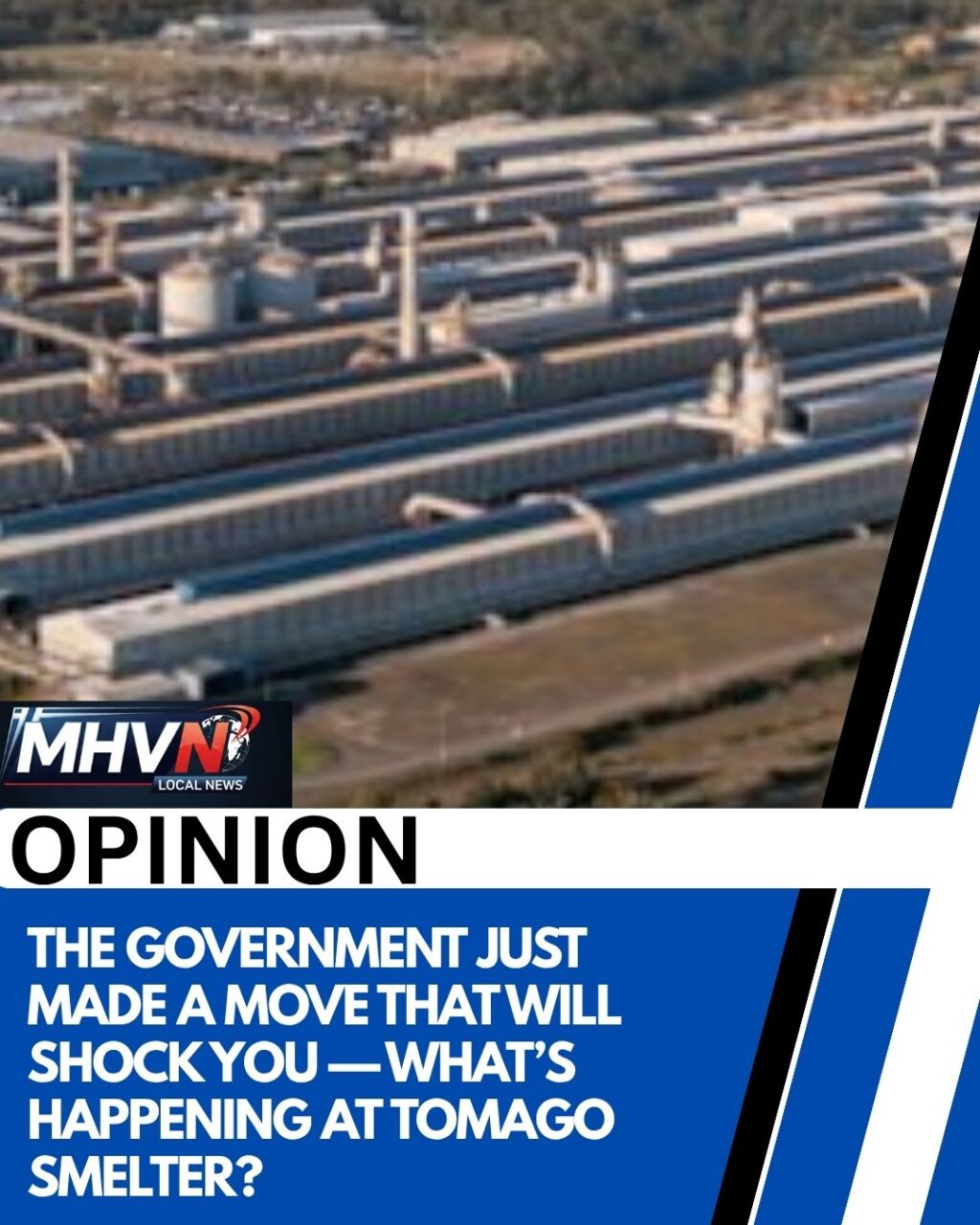
No — that money is being routed to Snowy Hydro, so it can secure power for the Tomago aluminium smelter — a facility tied to mining giant Rio Tinto.
So let’s just pause there.
The government is lending money…
To itself…
To help power a private multinational.
And you’re paying for it.
Now, if this deal made obvious economic sense, you wouldn’t need the government involved at all.
Private investors would be lining up.
Banks would be competing to fund it.
But they’re not.
And that tells you everything.
Instead, what you’re seeing is a kind of financial choreography — a carefully constructed loop where public money flows through public institutions to achieve a political outcome.
Not an economic one.
A political one.
And they’ll tell you it’s about jobs.
They always do.
They’ll tell you it’s about the future.
About clean energy.
About stability.
About keeping the lights on.
But here’s what they won’t say:
If this smelter were truly viable under current energy prices, it wouldn’t be staring down closure in 2028.
It wouldn’t need a billion-dollar lifeline.
So what’s really going on?
Well, start with this:
Rio Tinto is not a struggling company.
It is one of the most powerful mining corporations on the planet.
And yet somehow, in modern Australia, a company like that cannot operate without government-backed energy deals.
Think about what that means.
Then consider the mechanism.
You have the Clean Energy Finance Corporation — a body that was supposed to fund clean energy innovation — now being used to underwrite an industrial rescue.
You have Snowy Hydro — already tied up in massive, delayed infrastructure projects — being asked to deliver “cheap, firmed renewables” at scale.
And you have politicians assuring you this will all work out.
Based on what, exactly?
Because we’ve seen this before.
Snowy 2.0 was supposed to be a triumph — a symbol of the energy transition done right.
Instead, it became something else:
Delays.
Cost overruns.
Excuses.
And now, the same system that produced that outcome is asking for more money.
More trust.
More patience.
At some point, reasonable people start asking unreasonable questions.
Like:
Why does every “essential” project suddenly require public money?
Why do the risks always land on taxpayers — but the benefits flow elsewhere?
And why is it that ordinary Australians are told to accept higher power prices…
…while billion-dollar deals are quietly arranged behind the scenes?
This isn’t just about energy.
It’s about power.
Who has it.
Who benefits from it.
And who pays when it all goes wrong.
Because if this deal succeeds, you won’t hear much about it.
But if it fails — and that’s a very real possibility — the cost won’t disappear.
It will be absorbed.
By the public.
As it always is.
So the next time you hear this described as a “clean energy investment,” remember what it actually is:
A billion-dollar question.
And no clear answer as to why you’re the one footing the bill.