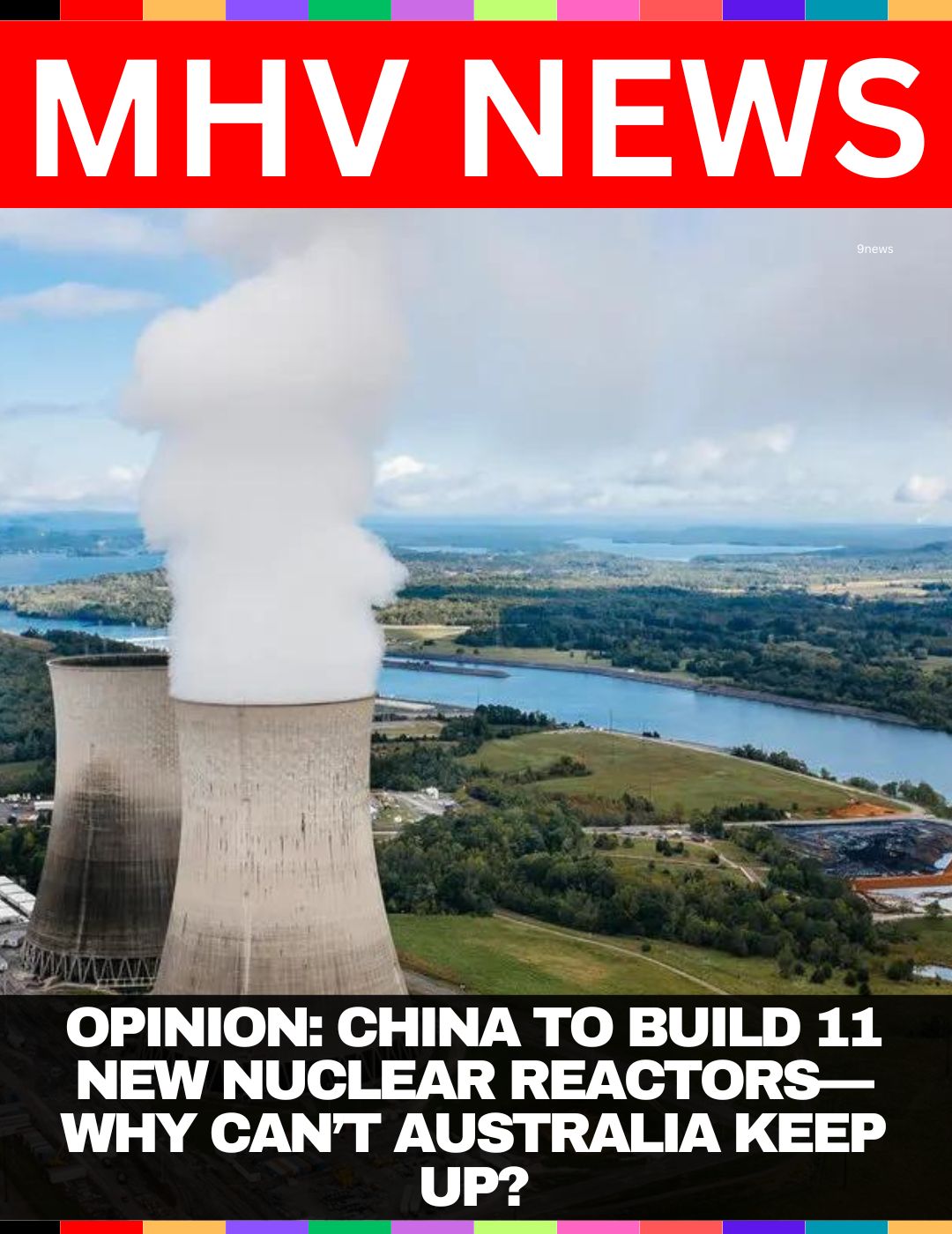
Opinion: China to Build 11 New Nuclear Reactors—Why Can’t Australia Keep Up?
China is charging ahead with nuclear power, greenlighting the construction of 11 new reactors across five provinces—Jiangsu, Shandong, Guangdong, Zhejiang, and Guangxi. With a total investment of 220 billion yuan ($45 billion AUD) and an ambitious five-year construction timeline, China is making bold strides in securing its energy future. But as Beijing builds a nuclear-powered tomorrow, Australia is stuck in a gridlock of debates and political roadblocks, unable to even contemplate the nuclear option.
China’s commitment to nuclear energy is unmistakable. The China National Nuclear Corporation (CNNC) is building the world’s first high-temperature gas-cooled reactor alongside a pressurized water reactor (PWR) at its Xuwei plant in Jiangsu. Once completed, these projects will generate over 11.5 billion kWh of electricity and cut carbon emissions by 19.6 million tonnes annually. And that’s just the beginning. Other state-owned giants like China General Nuclear Power Group (CGN) and State Power Investment Corporation (SPIC) are rapidly expanding their nuclear portfolios, with CGN now operating 28 reactors and building 10 more.
Australia, meanwhile, continues to rely on coal and gas, with renewable energy barely making a dent in our national grid. The nuclear debate in Australia has been mired in political indecision for years, despite growing global momentum for this reliable, low-carbon energy source. As we face increasingly severe climate challenges, why can’t Australia follow China’s lead in pursuing nuclear power?