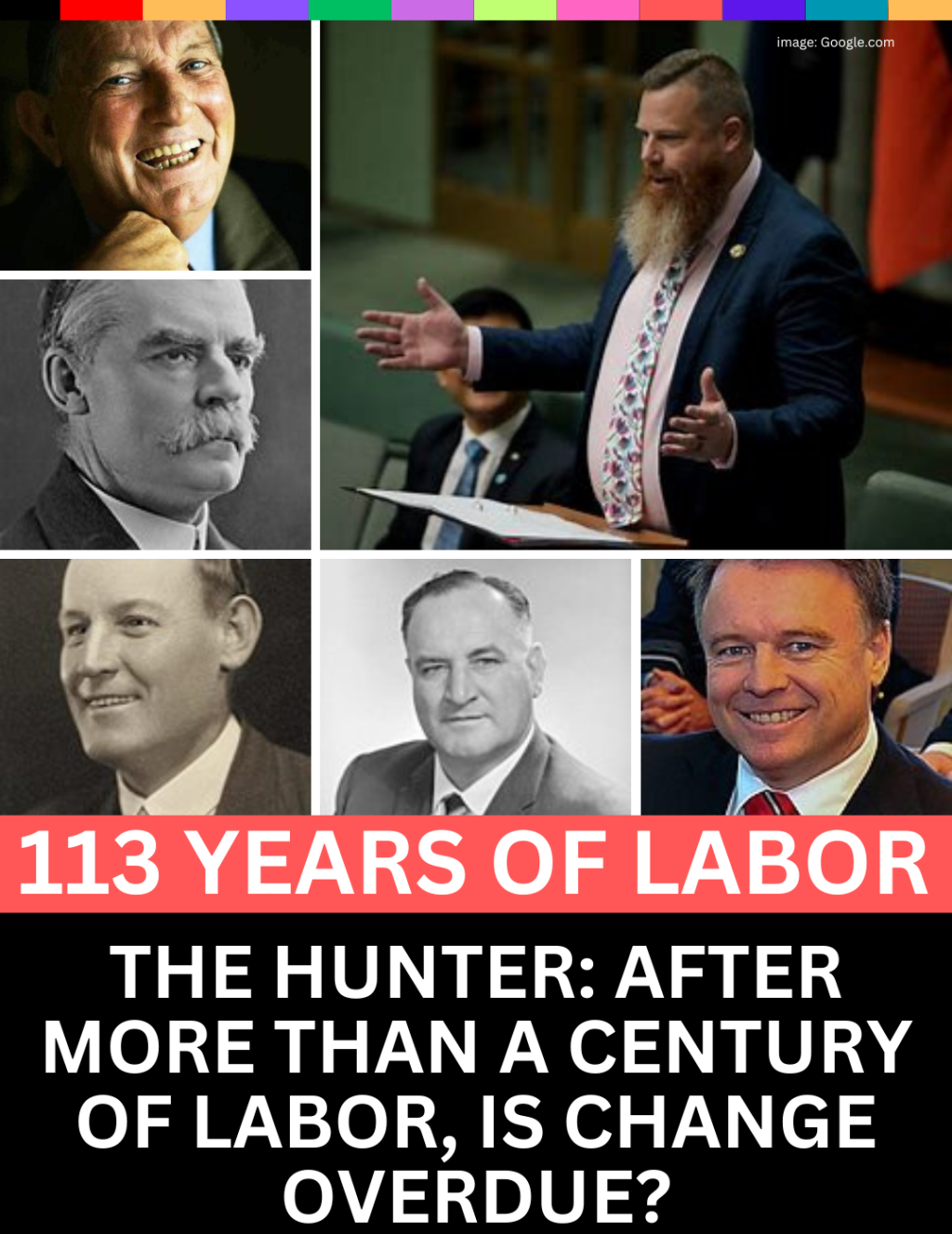
Labor has held the Division of Hunter since 1910, making it one of the safest seats in the country. This sprawling rural electorate, steeped in mining and agricultural history, has been a fortress for the Australian Labor Party (ALP) for over a century. With such an enduring record of dominance, one might assume the seat’s constituents are satisfied with the representation they’ve received. But beneath this veneer of safety lies a deep sense of frustration—a community crying out for genuine change.
The Hunter electorate has evolved over the decades. Once a purely industrial hub defined by its coal mines and dairy farms, it has grown into a diverse community grappling with modern challenges: the transition away from fossil fuels, housing affordability, and the struggle to attract investment for new industries. Despite this evolution, the political narrative here has remained frozen in time, with Labor’s focus squarely on mining and unions while broader community concerns often take a backseat.
Labor’s grip on the Division of Hunter has been ironclad, bolstered by a voting base that traditionally aligns with its working-class values. Joel Fitzgibbon, who held the seat for 26 years, was practically untouchable, his campaigns rarely needing to break a sweat. But his departure ahead of the 2022 election revealed cracks in the fortress. While his successor Dan Repacholi won comfortably, the result also showed a notable swing away from Labor, particularly to Independents and the Nationals.
This shift is a warning signal. The Hunter is no longer content with political complacency. Communities within this electorate have grown tired of being reduced to caricatures—the miner’s vote, the union’s stronghold—while their deeper needs are ignored. Infrastructure projects lag, housing becomes less affordable, and young families leave the region in search of opportunities elsewhere.
Labor’s leadership may view the Division of Hunter as a guaranteed win, but this mindset is precisely the problem. Overconfidence breeds stagnation, and stagnation breeds discontent. This complacency enabled Labor to parachute in a candidate like Dan Repacholi, who had no prior experience and continues to make a mockery of the position, appearing more interested in creating memes than crafting meaningful policy. As Labor shifts its focus from fossil fuels to renewables, it risks alienating its blue-collar worker base while simultaneously running a scare campaign on nuclear energy that seems to draw its “facts” straight from The Simpsons.
Dan Repacholi’s staunch support for mining and his criticism of nuclear energy are emblematic of this challenge. While mining remains vital, the electorate’s long-term prosperity hinges on adaptability, innovation, and investment in future-proof industries. A seat as critical as Hunter should be at the forefront of shaping Australia’s economic policies—not clinging to past glories.
The Division of Hunter is a microcosm of Australia’s broader political landscape: a clash between old loyalties and new realities. Voters here are increasingly aware of their power to disrupt the status quo. The rise of Independents and the Nationals’ growing foothold in parts of the electorate signal that residents are weighing their options.
It’s time for Labor to treat the Division of Hunter as more than just a safe seat and to engage meaningfully with the community’s changing priorities. The electorate deserves representatives who will push for better schools, roads, hospitals, and affordable housing, while fostering a forward-thinking economic plan.
The Hunter is not a seat to be taken for granted. It is a region with immense potential—one that deserves leaders willing to adapt, innovate, and genuinely listen. More than century of dominance since 1910 is not a mandate for complacency. If Labor continues to rest on its laurels, the safest seat in the country may very well become the loudest cry for change.