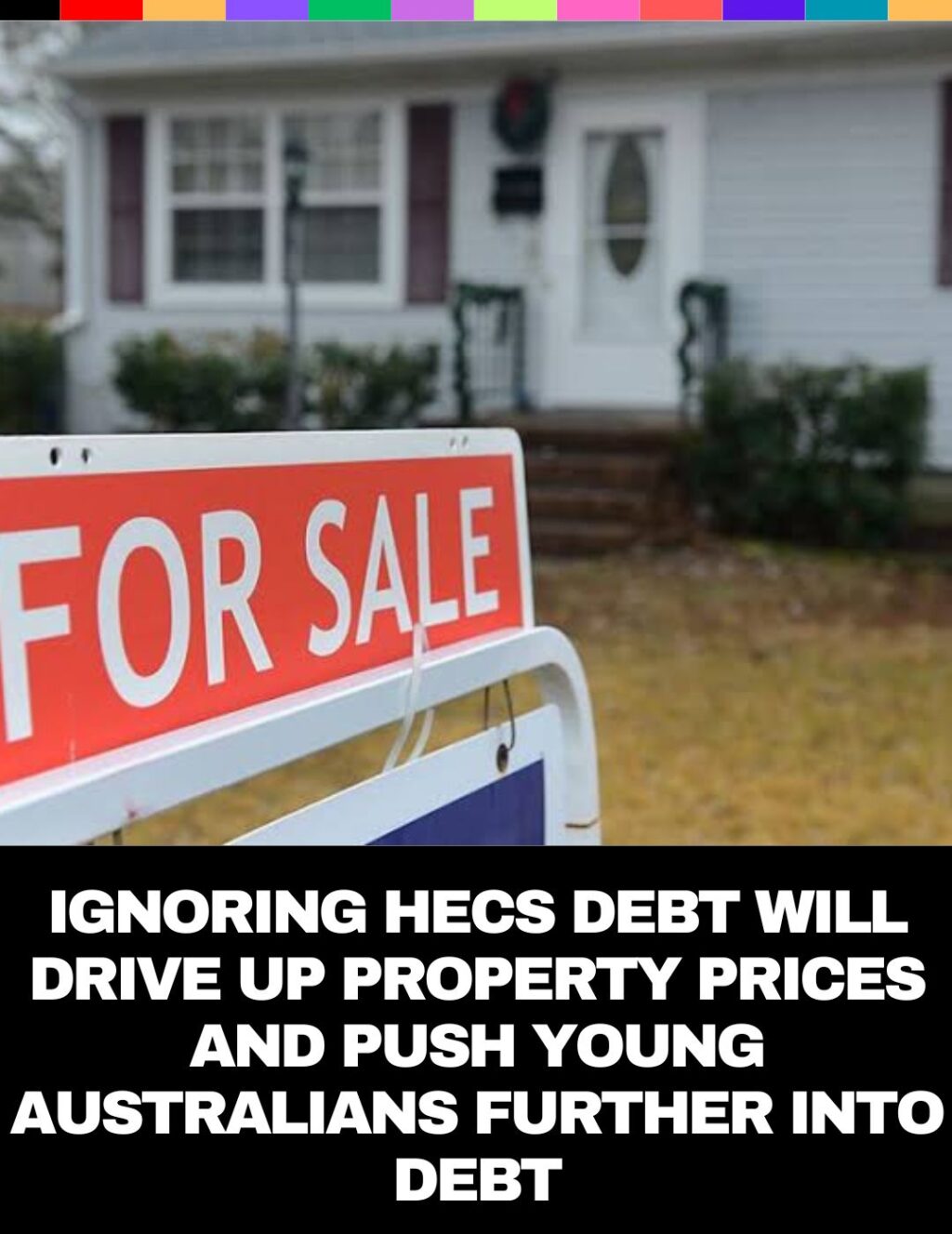
The HECS Housing Scheme: Australia’s Latest Recipe for Disaster
Imagine you’re a young couple, working hard, saving every cent for a home. You finally scrape together a deposit, only to find out that house prices have jumped—again. Why? Because the government and the banks have cooked up yet another scheme to artificially inflate the market. Their latest idea? Ignore HECS debt when calculating home loans. Yes, really.
Now, at first glance, that might sound like a good thing. “Look, young people can finally afford homes!” the politicians will say. But dig a little deeper, and you’ll see this for what it is—yet another reckless policy designed to prop up an already broken housing market, all while saddling Australians with even more debt.
Here’s the problem: HECS is still real debt. It doesn’t just disappear because a banker decides to pretend it doesn’t exist. Students graduate with tens of thousands of dollars in HECS debt, which they pay off through higher tax rates. It’s a slow, creeping repayment that eats into their disposable income for decades. But under this new plan, banks will pretend that debt doesn’t exist when approving mortgages.
So what happens next? The moment banks loosen lending standards, home prices will surge—because now, even people drowning in HECS debt can qualify for bigger loans. And who benefits? Not first-home buyers. No, the real winners are the investors, the developers, and the banks that get to keep raking in profits while ordinary Australians take on even more financial risk.
This isn’t just irresponsible—it’s dangerous. By ignoring HECS, banks will push young Australians into unaffordable mortgages. The moment interest rates rise, or inflation eats into their paychecks, these borrowers will struggle to make repayments. And when defaults pile up, what do you think happens? The housing market crashes, and once again, taxpayers will be left to clean up the mess.
Does this sound familiar? It should. This is the same reckless lending behavior that led to the U.S. housing collapse in 2008. Banks issued loans to people who couldn’t really afford them, betting that everything would be fine. It wasn’t. The entire financial system collapsed. And now, Australia seems determined to follow the same playbook.
Let’s be clear: The real issue isn’t HECS debt. The real issue is that Australian housing is fundamentally unaffordable. For decades, politicians—on both sides—have done everything in their power to keep prices high. Foreign buyers? Sure, let them in. Negative gearing for investors? Absolutely. Mass migration during a housing shortage? Of course! Every decision they make benefits property developers, not ordinary Australians.
And now, when young Australians are struggling the most, the government’s big idea is to ignore student debt so banks can hand out even bigger loans. Think about that. Instead of fixing the problem—like reducing migration, cutting property speculation, or building more homes—they’re doubling down on the same failed policies.
Make no mistake, this will not end well. The more we inflate the housing bubble, the harder it will burst. We’ve seen it before. We’ll see it again. And when it does, the banks will get bailed out, the politicians will retire with their taxpayer-funded pensions, and the working-class Australians who just wanted to buy a home will be left holding the bag.
So if you’re wondering why housing is so expensive, it’s because of ideas like this. Ideas that ignore basic economics, that benefit the elite at the expense of ordinary Australians, and that push an entire generation further into financial ruin—all while pretending to help them.
Australia, you deserve better.