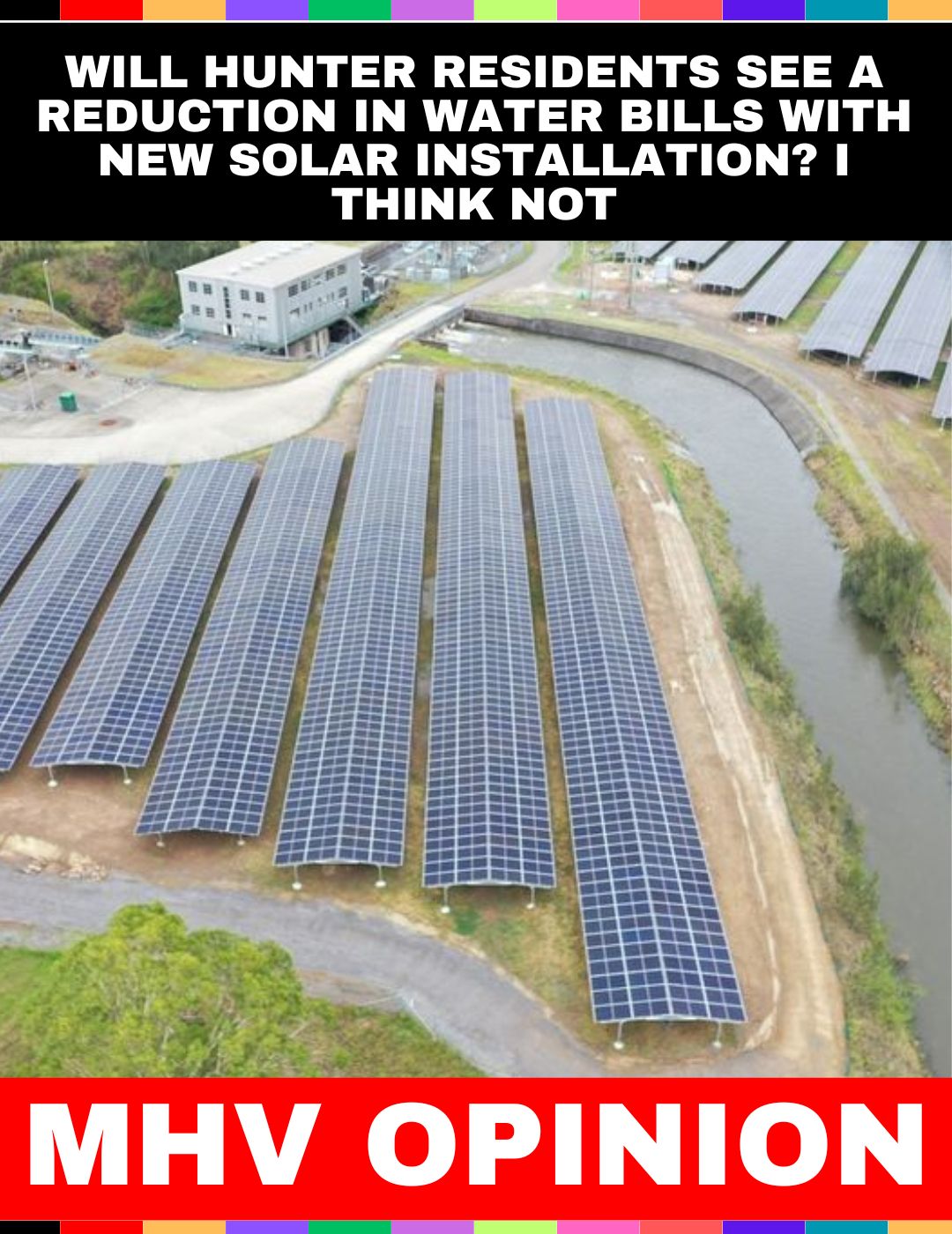
Hunter Water’s recent completion of a 3.1MW solar installation at Balickera Water Pump Station is being hailed as a significant achievement in the push toward renewable energy. It’s a commendable step toward sustainability, but for residents, the question remains: will this major solar project lead to any real reduction in water bills? Based on the available information, the answer seems doubtful.
The Balickera solar farm, part of a broader initiative that brings Hunter Water’s total renewable energy generation to over 6MW, is projected to save the company around $700,000 per year in electricity costs. That’s a substantial figure, given that energy accounts for up to 10% of Hunter Water’s operating expenses. However, there’s no direct indication that these savings will be passed on to consumers.
In fact, water rates have been climbing steadily across the state. Hunter Water’s costs have indeed decreased, but the savings appear to be earmarked for operational improvements and environmental projects, rather than easing the financial burden on households. This raises a critical point: even though Hunter Water is reducing its carbon footprint and operational expenses, the financial relief for residents isn’t evident.
Another layer of complexity is that solar energy, while reducing operational costs, requires a hefty upfront investment. Solar farms like the one at Balickera come with millions in installation costs, not to mention ongoing maintenance and future upgrades. Hunter Water has not indicated that the capital expenditures associated with these renewable energy projects will be balanced out in a way that benefits customers through lower rates.
It’s also worth noting that Hunter Water has taken commendable steps in environmental rehabilitation. The planting of more than 1,500 trees to offset the impact of the solar array is laudable, but such measures are unlikely to make a meaningful impact on water bills. As the company continues to make strides toward sustainability, it’s clear that environmental wins are being prioritized over economic relief for customers.
Residents of the Hunter region should applaud Hunter Water’s move toward sustainability, but it’s important to remain skeptical when it comes to the potential impact on household water bills. The real financial benefits of these projects appear to be staying within the company’s operations, not trickling down to the people who pay the bills.
So, while Hunter Water celebrates its renewable energy milestone, the question for locals remains: when will we see the savings reflected in our water bills? Unfortunately, as things stand now, that day seems a long way off.