Key Points:
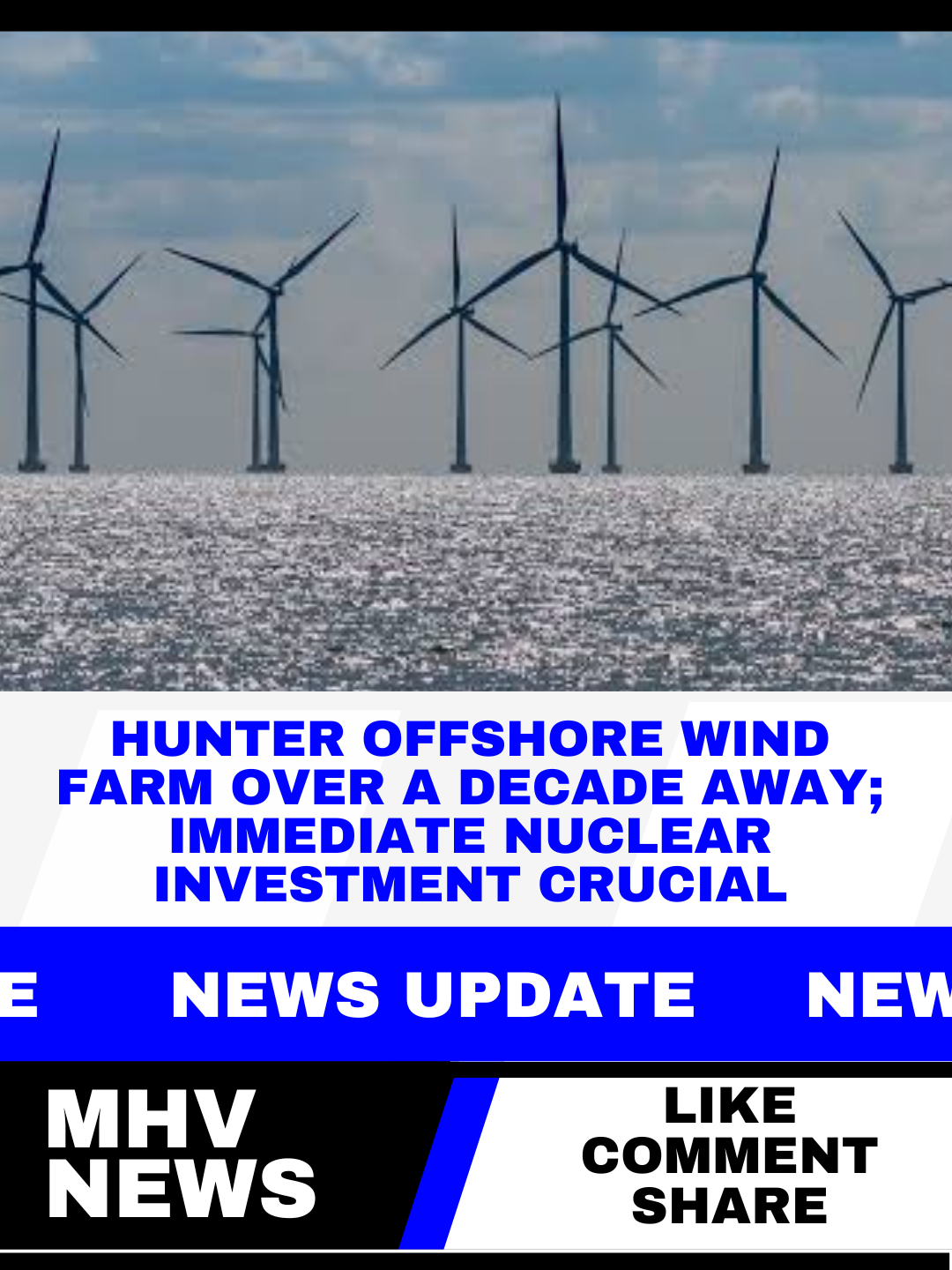
- Hunter offshore wind zone not expected to be operational until next decade.
- Nuclear energy debate is undermining investor confidence.
- Victoria leads in advancing offshore wind industry.
The Hunter offshore wind zone is projected to be operational only in the next decade, according to experts. One expert noted that ongoing debates over nuclear energy are shaking investor confidence. Meanwhile, government officials pointed out that Victoria is spearheading efforts in the offshore wind industry.
Offshore wind has significant potential for renewable energy generation, leveraging strong and consistent sea winds. However, the development timeline is lengthy, often exceeding a decade from planning to operation. The delay of the Hunter offshore wind zone underscores challenges such as complex regulatory approvals, high initial capital investment, and substantial infrastructure requirements.
With aging coal power plants closing across the Hunter region, the Eraring power station has been granted an extension to continue operations. However, this extension may need to be prolonged again as renewable projects lag, and both previous and current governments have not committed to nuclear energy, which would only take 5 to 6 years to develop if started today. Consequently, NSW may have to keep old coal plants online much longer than expected.
The uncertainty in the energy market, exacerbated by nuclear energy debates, is impacting investor confidence. Offshore wind projects require stable, long-term policy commitments to attract investment and ensure economic viability. Without such stability, investors may hesitate to commit the necessary capital, further delaying project timelines.
In contrast, nuclear energy presents a reliable and consistent energy source with lower greenhouse gas emissions compared to fossil fuels. Modern nuclear reactors are designed with enhanced safety features and have a smaller environmental footprint than traditional reactors. For the Hunter region, nuclear energy could provide several advantages over offshore wind:
- Consistency and Reliability: Nuclear power plants offer a stable base load of energy, unaffected by weather conditions, crucial for maintaining a consistent power supply during the transition from coal.
- Speed of Deployment: Advancements in modular reactor technology can reduce construction times and costs. Small modular reactors (SMRs) can be deployed more quickly and scaled to meet regional energy demands.
- Economic Impact: Developing nuclear energy in the Hunter region could create high-skilled jobs and stimulate the local economy. A stable energy source can attract other industries, fostering economic growth.
- Energy Independence: Investing in nuclear energy can reduce Australia’s reliance on imported fuels, enhancing energy security amidst global supply chain disruptions and geopolitical tensions.
While offshore wind offers a renewable and sustainable energy source, current delays and investment uncertainties make it less viable in the near term for the Hunter region. Nuclear energy, with its reliability, faster deployment potential, and economic benefits, presents a compelling alternative. By embracing nuclear technology, the Hunter region can achieve energy stability, support economic growth, and contribute to Australia’s transition to a low-carbon future.